
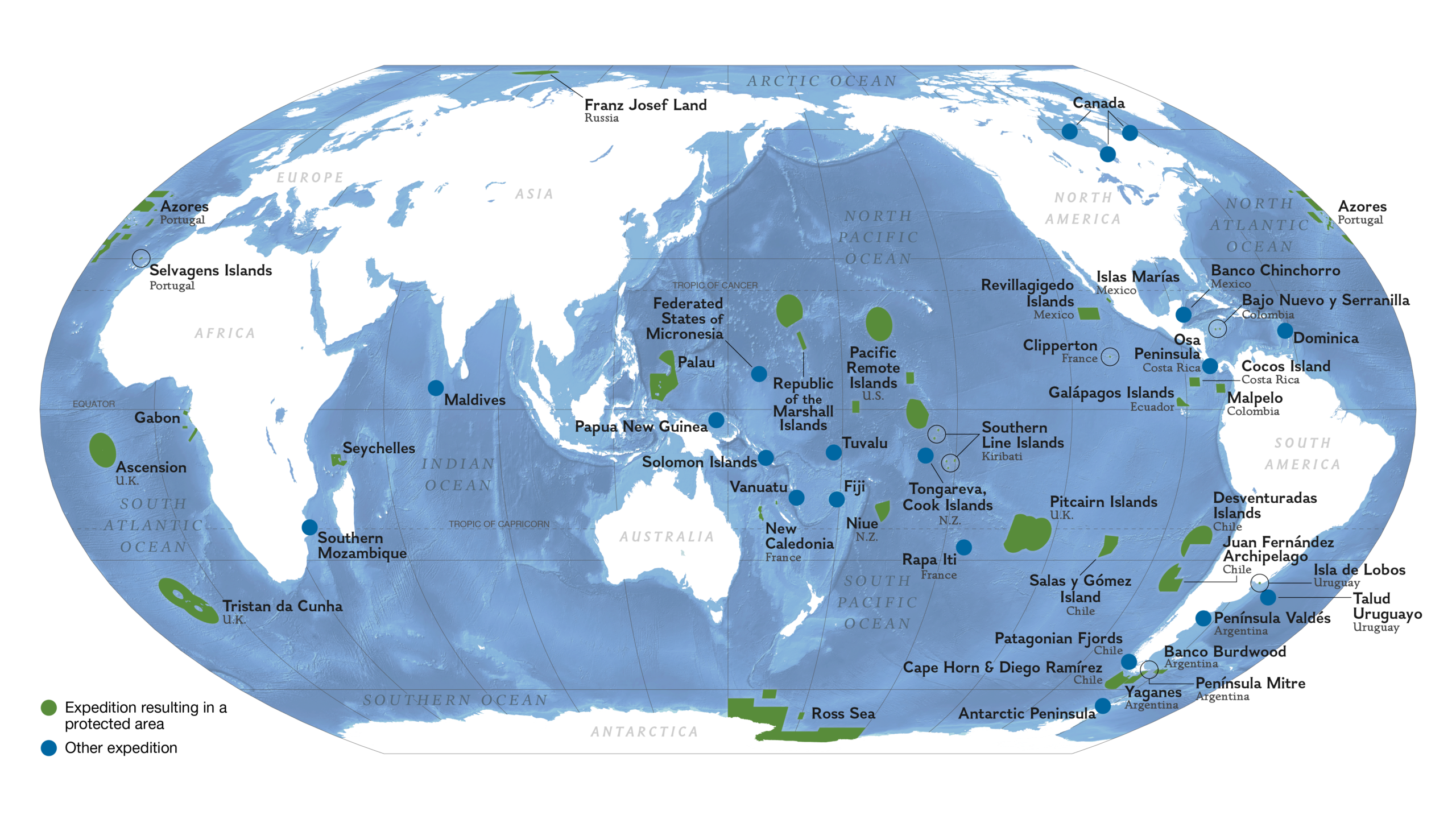

From the "Twilight Zone" to Ancient Reefs, Pristine Seas’ 50th Expedition Studies the Marshall Islands
Pristine Seas returns to the Marshall Islands to explore waters around seven atolls to understand the resilience of rare ecosystems.

Solomons Islands: Pristine Seas Studies the Coral Triangle, the Epicenter of Marine Diversity
Pristine Seas conducts an expedition in the Solomon Islands and explores methods to protect parts of the Coral Triangle–the epicenter of marine diversity in the Pacific Ocean.

Papua New Guinea: Pristine Seas Explores One of the Most Biodiverse Oceans on Earth
Pristine Seas conducts expedition in Papua New Guinea — one of the most unique marine environments on the planet — to support ocean conservation.
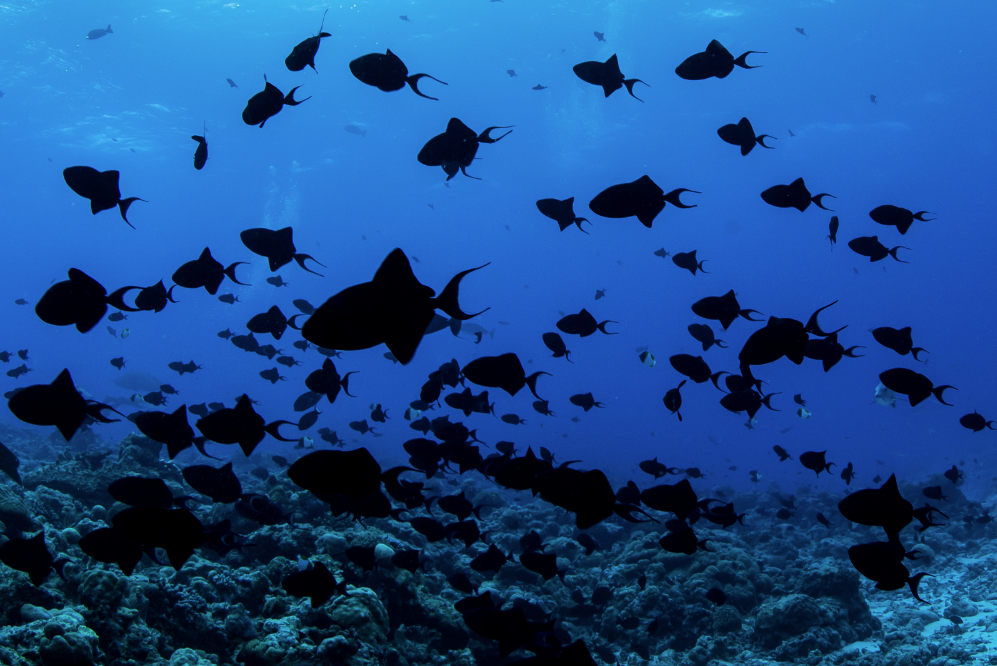
Year Two of Pristine Seas: The Global Expedition Launches in Palau
Pristine Seas returns to Palau to conduct marine surveys, bringing with them Nat Geo Education team members for a special student outreach.


Enric Sala
Enric Sala is a former university professor who saw himself writing the obituary of ocean life, and quit academia in 2008 to become a full-time conservationist as National Geographic Explorer in Residence. He founded and leads National Geographic Pristine Seas, a project that combines exploration, research, media, economics and policy – working with local communities, Indigenous Peoples and governments to protect vital places in the ocean. To date, Pristine Seas has helped to create 30 of the largest marine reserves on the planet, covering an area of over 6.9 million square kilometers. Enric has received numerous awards, including 2008 World Economic Forum’s Young Global Leader, 2013 Explorers Club Lowell Thomas Award, 2018 Heinz Award in Public Policy, National Geographic Hubbard Medal, Albert I Grand Medal, and Officer of the Order of San Carlos of Colombia. He is a fellow of the Royal Geographical Society.